Ever heard of the six degrees of separation theory? The idea is that we’re all connected to almost everyone else in the world through a surprisingly small number of personal connections.
LinkedIn works in much the same way. You have your direct connections, their connections, and the wider network beyond that. While this makes LinkedIn an incredibly powerful professional networking tool, it also means that information you share could reach a much wider audience than you realise.
And that’s where the security risk comes in.
Cybercriminals are increasingly using information gathered from social media to build convincing scams, impersonate individuals and target businesses. Your job title, birthday, photograph, employment history and even your connections can all help someone build a profile of you.
The good news? A few simple changes to your LinkedIn privacy and security settings can make a real difference.
5 ways to make your LinkedIn profile more secure
1. Think carefully about the personal information you share
Your full name, date of birth, contact details and other personal information can all be useful to someone trying to impersonate you or answer security questions.
Review the information displayed on your profile and consider whether everyone really needs access to it. In particular, avoid publishing your full date of birth or personal contact details.
2. Review who can see your profile photograph
Your profile picture helps colleagues and professional contacts recognise you, but publicly available photographs can also be misused to create convincing fake profiles or impersonate you.
Check your profile photo visibility settings and decide whether you are comfortable with it being visible to everyone or would prefer to restrict access to your LinkedIn network.
3. Check your public profile visibility
LinkedIn allows you to control which sections of your profile are visible to people who aren’t signed in or aren’t part of your network.
Review your public profile settings and consider limiting access to information that isn’t essential for your professional presence.
You don’t need to hide your career history or achievements, but think about how much detail you make publicly available.
4. Be selective about your connections
Not every connection request is genuine. Fake profiles can be created to gain access to professional networks, gather information or establish trust before launching a phishing attack.
Before accepting a connection request, take a moment to check the person’s profile. Look for a credible employment history, genuine connections and signs that the account is legitimate.
If something doesn’t feel right, don’t accept the request.
5. Enable two-step verification
This is one of the most important steps you can take to protect your LinkedIn account.
Two-step verification (also known as two-factor authentication or 2FA) adds an extra layer of security when signing in. Even if someone manages to obtain your password, they will have another security barrier to overcome.
Where possible, use an authenticator app rather than relying solely on SMS verification.
Remember: your digital footprint is valuable information
LinkedIn is designed to help you be visible, build relationships and develop your professional reputation. There’s absolutely no need to disappear from the platform to stay safe.
However, it’s worth remembering that information shared online can be collected, combined and used in ways you never intended.
Take a few minutes to review your privacy settings, think before accepting new connections and make sure your account has the right security protections in place.
Stay visible professionally, but keep your personal information protected
Because good cybersecurity isn’t just about protecting your business systems. It’s also about protecting the people who use them.
Need help improving your organisation’s cybersecurity? Get in touch with the Fusion Technology Solutions team to find out how we can help protect your people, systems and business.
Featured post
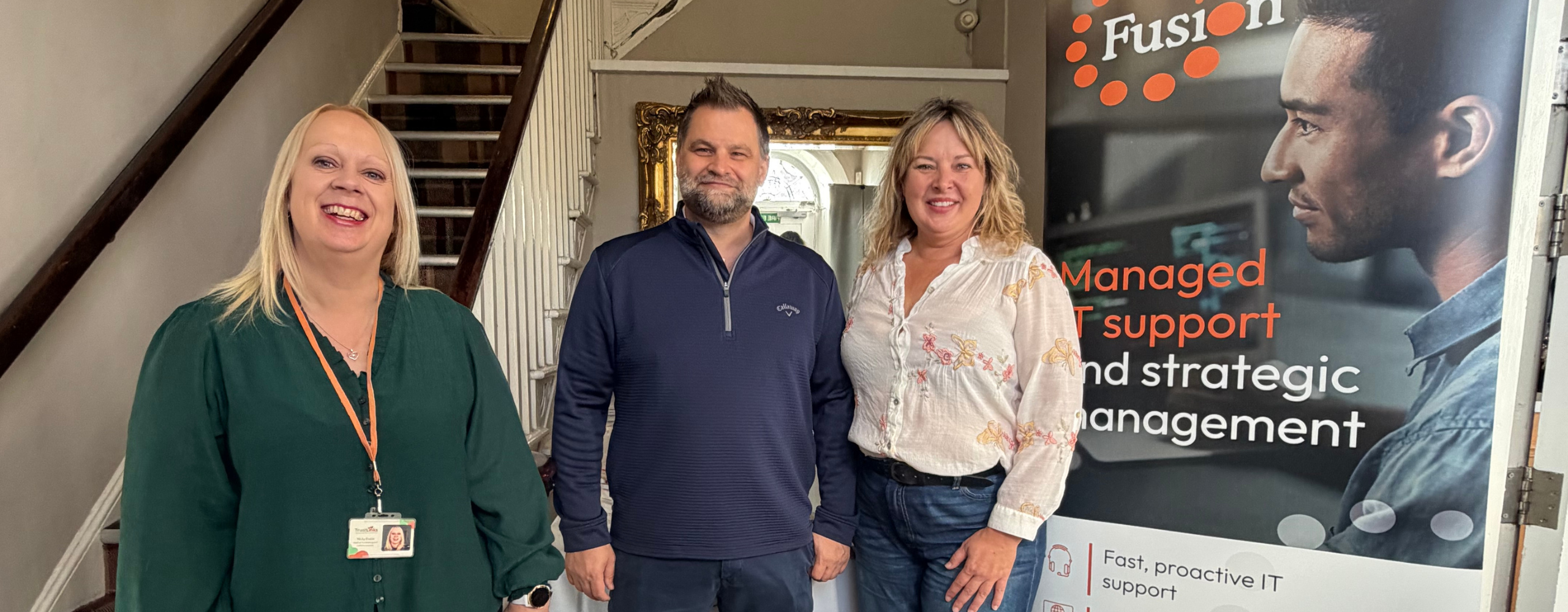
Fusion Supports TrustLinks at their 2026 Charity Golf Day
Fusion Technology Solutions was proud to be the headline sponsor of the TrustLinks 2026 Charity Golf Day this month, supporting an important local cause dedicated to improving mental health and wellbeing.
Recent posts
Latest posts

Case Study: Building Coriant a secure, reliable and scalable foundation for sustainable growth
Coriant is a dynamic and expanding force in industrial services, focused on the maintenance of assets across critical industries. With approximately 300 staff spread across seven office locations, the company has been on an exciting growth trajectory, including strategic acquisitions that have broadened their capabilities and market reach.

Should your business move everything to the cloud?
Over the past decade, cloud technology has completely transformed the way businesses operate. From seamless collaboration and remote working to enhanced security and scalability, cloud-based platforms have become the backbone of modern organisations. Yet many business owners still ask the same question: Should we move everything to the cloud?

5 signs your business has outgrown break-fix IT support
Break-fix IT support is often the starting point for many small businesses. When a problem occurs, an IT provider is contacted to resolve it, and the business pays for the work completed. While this approach can be suitable in the early stages, it often becomes less effective as a business grows and becomes more reliant on technology.

